What happens when all your excuses suddenly disappear and you're face-to-face with your real dreams?
Sometimes things happen that you don't immediately recognize as opportunities, like a pandemic such as COVID...
When the world suddenly hits the brakes, you get time to think. No daily traffic jams, no overpacked schedule, no 'just quickly squeezing something in'. The calm brings space and space brings clarity.
What do you really want in life?
self-reflection COVID
It started with silence
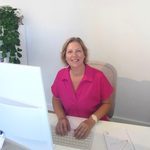
Working from home immediately felt like coming home: no chatter, no distractions, just me and my laptop. I worked faster, more concentrated and had more energy left at the end of the day because no time lost in traffic, no small talk on the way to the printer, no long lunch breaks anymore. As if someone had turned down the volume button of my life a few notches and that turned out to be refreshing. I was happy, simply in my own cocoon. No loneliness, just overview, peace and focus.
remote work lifestyle
Memories of sun, sea and Spanish culture
In the silence you have time for memories. As a child we went to Fuengirolaevery year, a town in Southern Spainwhere my parents had an apartment. We stayed there the entire summer vacation: my love for Spanish culture and the southern rhythm was born there. My sister recently reminded me that I already said back then: "Later I'm moving to Spain." I had forgotten it but the longing clearly remained dormant somewhere.
realise dreams
The foreign bug had been in my blood for a long time
At nineteen I booked my first solo trip, a last-minute to Rhodes, after my then-boyfriend called it of. No desire for self-pity or drama, so off packing my suitcase and leaving. That vacation even got me my first job offer. I politely declined, because ‘being wise’ was still at the top of my list back then. And as with so many, reality took over. Studies, work, career... it rolled as it rolled. But looking back, the urge for adventure was already there.
Not so strange, by the way. My family is quite... internationally scattered.
My mother once stood on the verge of moving to Spain herself, until she met my father and decided to stay in Belgium. But with family in a.o. France, Greece, Brazil and Australia, it's not surprising that I too dreamed of a life beyond borders. Maybe it's just in our DNA.
living in Spain
And then comes COVID. And everything lies open.
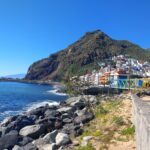
Suddenly I had time to feel what I really dreamed of. And that was clear: more peace, more sun and more freedom. Less hustle, fewer obligations and less 'having to'. We started dreaming, talking and planning with concrete steps. And today we live in Spain, not in Fuengirola, but on an island where the sun shines daily and life follows a different rhythm.
As a Virtual AssistantI can work perfectly remotelyand the quality of my work has only improved. More focus, more balance, more satisfaction. My workday now starts with focus instead of traffic jams.
working from home as self-employed
No big life lesson, just a good story
Life here is slower, more intense and simpler. And no, I don't think 'I should have done this earlier', because everything that preceded it brought me exactly here.
lockdown life change
What did the pause button do for you?
For me there's clearly a BEFORE and AFTER COVID.
COVID gave me the space, the time and the push to finally choose my dream life.
Maybe it made you realize something too?
What did that period bring you?
Did you also change something in your life – big or small – that you might never have considered without that silence?
What living in the Canary Islands taught me: let’s be more proud of our language in Flanders
living in the Canary Islands
We should be more chauvinistic about our language in Flanders!
This past year living in the Canary Islandshas taught me a lot. Not just about life abroad, but also about language: in Flanders, we could afford to be a little more proud, even protective, of our language.
learning Dutch in Flanders
Language isn’t a luxury, it’s the foundation
In Flanders, we go out of our way to make things easier for foreigners. If someone struggles with Dutch, we automatically switch to English or French. Well-intentioned, of course. But does it actually help?
I once asked someone who has lived in Flandersfor over ten years why he still hardly speaks Dutch. His answer surprised me: "You all always spoke to me in English. How was I supposed to learn Dutch?" Touché!
expat experience with language
In Brussels, it suddenly worked
When he moved to Brussels, he picked up French in no time. Not because he tried harder, but because people there only spoke to him in French. Everyone, everywhere. And so he learned because he had no choice.
That exact realization has hit me hard here in the Canary Islands.
integration through language
Spanish or nothing
In smaller, non-touristy towns, locals often only speak Spanish. If you want to ask something, you have to do it in their language. Didn’t understand? Too bad. It’s frustrating at times, and yes we often rely on a translation app... but this is how we’re truly learning the language!
language and identity Belgium
Practice beats theory
Last week we had a doctor’s appointment, not exactly the kind of Spanish vocabulary we use every day. We told the doctor on beforehand that we’re still learning Spanish and asked if he could speak a little more slowly. That request was, of course, cheerfully ignored. Luckily, the nurse was patient, and my partner has a medical background so we understood most of what was said and we learned new things. And that kind of knowledge sticks way better than learning with Duolingo!
You don’t learn a language from a book or an app. You learn it on the street, at the bakery, in a waiting room. By making mistakes, by feeling frustrated sometimes, but above all: by showing up every day and trying again.
why Dutch matters
So: should we be prouder of our language in Flanders?
Absolutely: because by showing love and consistency for our own language, we give others the opportunity to truly become part of it.
Life on Tenerife with sleeping giant Teide as Etna erupts
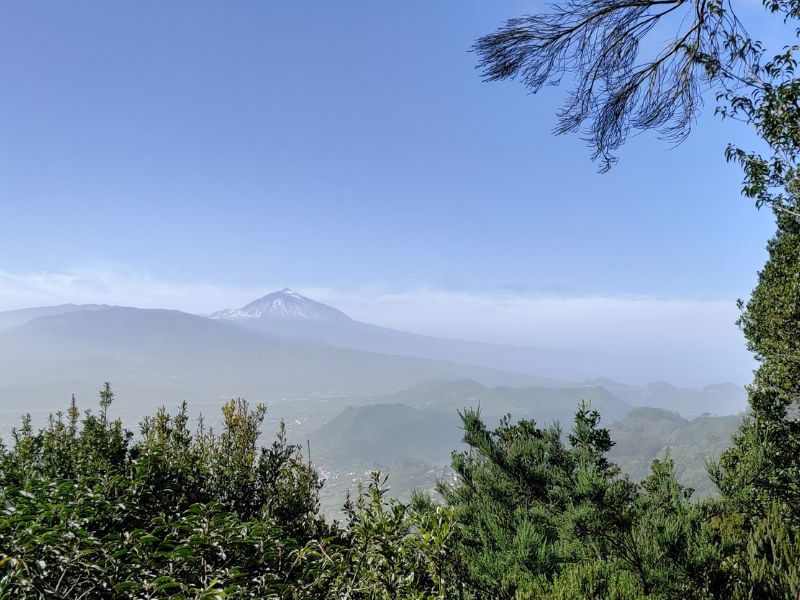
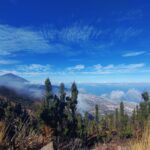
Sicily's volcano Etnaerupted again on Monday, which makes things a bit exciting for us here on Tenerife. Because here, too, we have a volcano: the Teide, Spain's highest mountain and an active volcano.
A conscious decision
Before we moved to Tenerife, we informed ourselves extensively about the volcanic risks. We wanted to be absolutely sure that we ended up in a safe place. So not a wild guess, but a thoughtful choice, based on scientific research and advice from local experts.
We deliberately live on the northeast side of the island, the safest zone in Tenerife according to volcanologists. A possible eruption would spread mainly southwest, far from our home.
Safety as well as peace and quiet, ideal for me as a Virtual Assistant, who likes to work concentrated every day in a quiet environment surrounded by nature.
Though Teide is technically active, its last flank eruption was in 1909, and the main crater hasn’t erupted in over 1,000 years.
There are occasional minor earthquakes, but they are so small that we don’t even feel them.
Living on a volcanic island? Yes, aware and prepared
A volcanic eruption like Etna’sreminds us how alive the earth is, but it does not mean we live in fear. We have chosen a safe location, are well prepared and feel completely at home here.
And should he ever wake up? Then we will be sitting in the front row from a safe distance to admire the mighty forces of nature.
Tenerife gives us the ideal balance between nature, tranquillity and working comfort, even with a sleeping giant nearby.